BODY SHOP INSPECTION
Detect cosmetic surface defects on reflective Body-in-White assemblies in real time. By providing consistent and traceable inspection throughout production, the system supports operators in identifying defects early and prevents costly repairs in downstream paint processes.
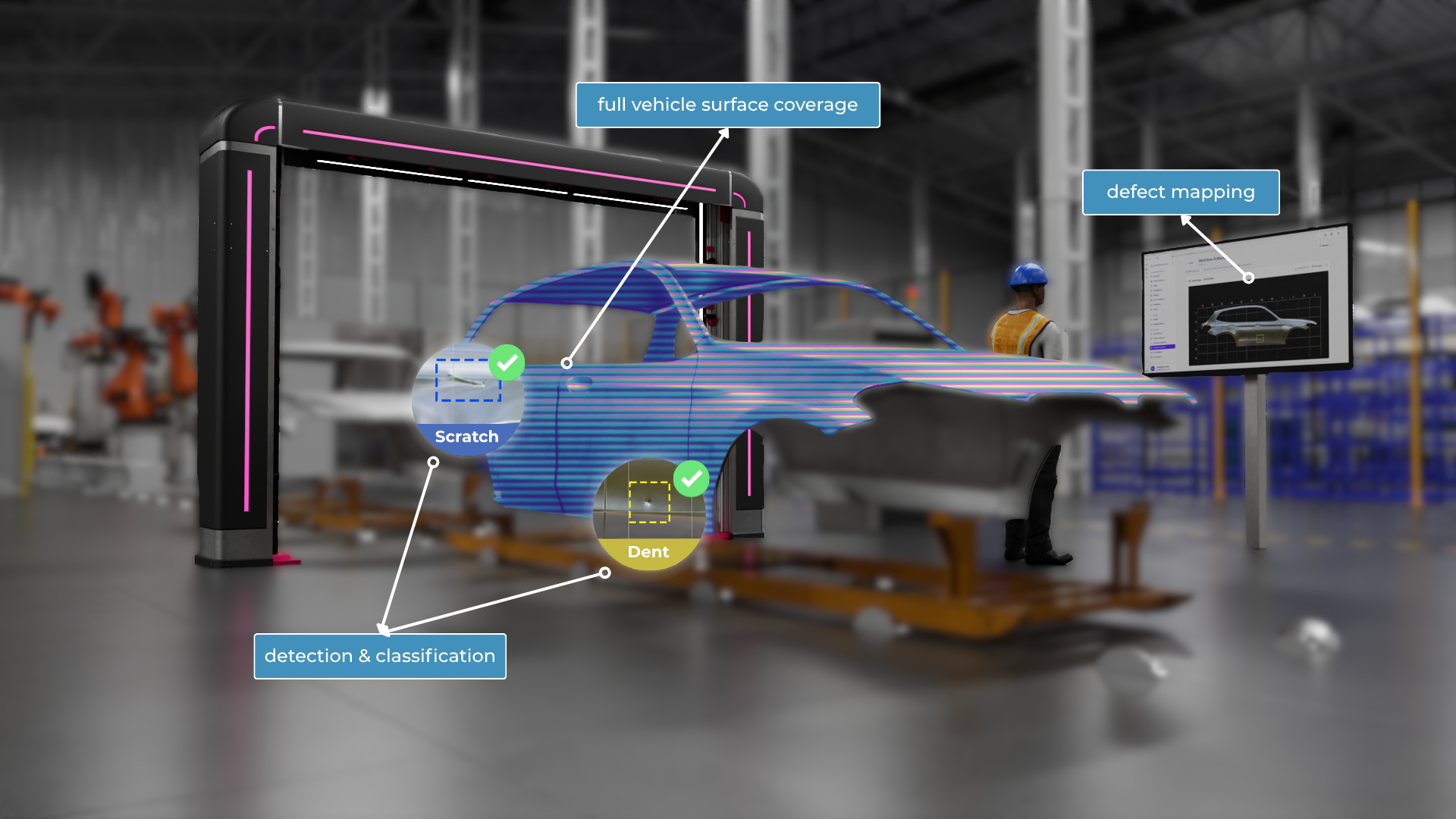
Inspect vehicle bodies directly on the production line with Vision AI for real-time defect detection, severity classification, VIN-linked defect mapping and operator-guided rework.

Inspect every vehicle body automatically as it moves through the production line, without interrupting production flow.

Detect and localize common Body Shop surface defects such as dents, dings, fixture marks and other surface irregularities in real time.

Group detected defects by severity (from highly visible Type A defects to subtle Type C surface imperfections) to help operators prioritize inspection and rework.

Map detected defects to each vehicle and link inspection results to the VIN, giving operators a clear visual reference for rework while enabling integration with internal quality systems.
Body Shop operations introduce recurring surface issues such as micro-dents, dings, weld spatter, heat tint, fixture marks, and subtle panel distortions that are extremely difficult to catch on unpainted, reflective BIW metal. Our solution accurately detects all major Body-in-White cosmetic defects at line speed, helping manufacturers prevent rework, repaint, scrap, and downstream quality failures before parts move into Paint Shop.
SYNTHETIC DATA APPROACH
Real production defects are often too rare and inconsistent to provide enough training data for every panel and defect type. Robolaunch combines real production references with synthetic defect generation to create realistic defect variations across location, size, orientation and surface conditions.
This enables to develop and adapt detection models for new defect classes and part variants without long and costly field data collection.
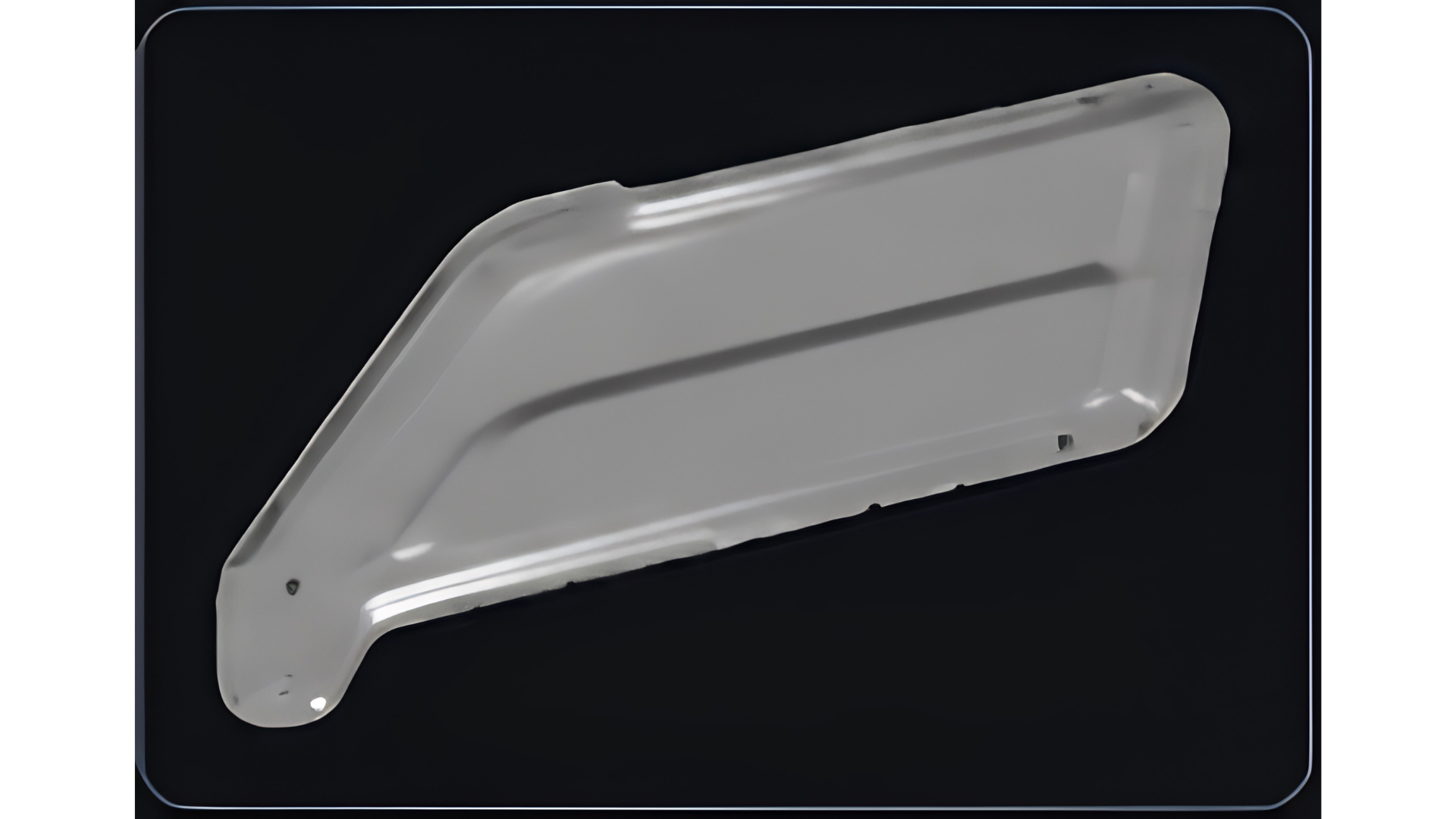
1. 3D Panel Model
CAD model of the part
to place defects
specific for panel type.
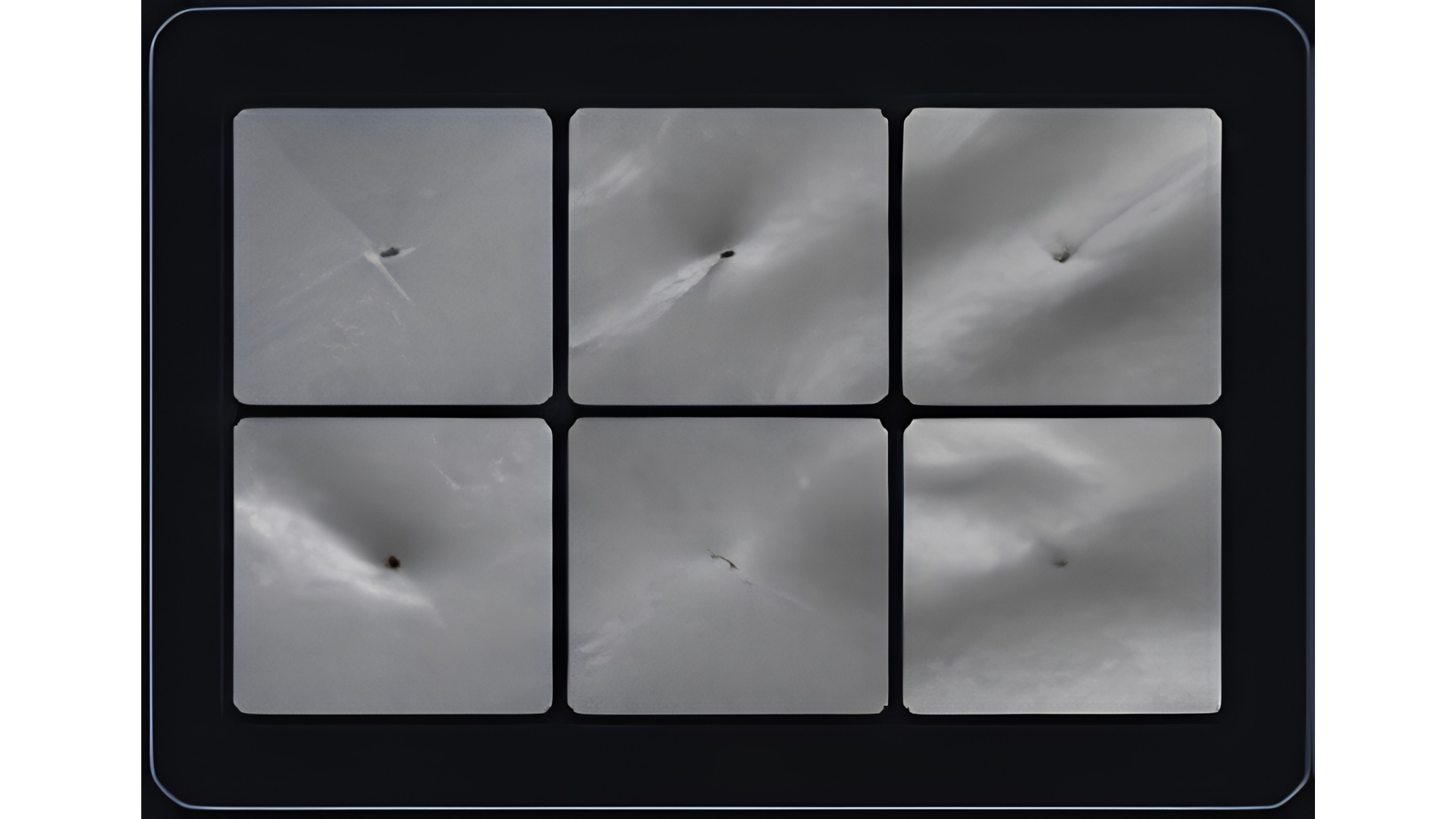
2. Synthetic Defect Gen.
2D and 3D modelling
of defect(s) with
limitless variations.
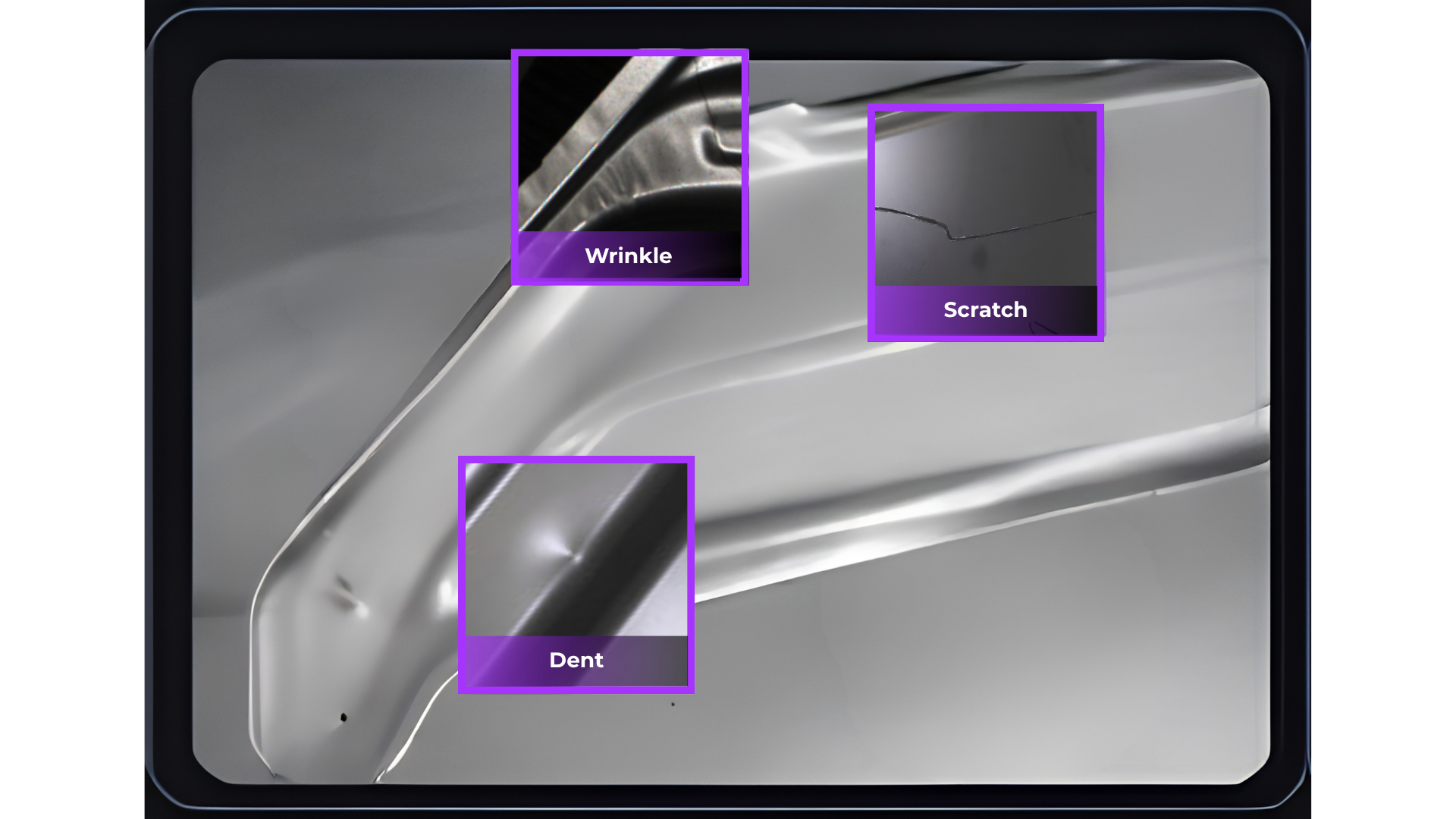
3. AI Model Training
Detection for
target and new
defect classes.
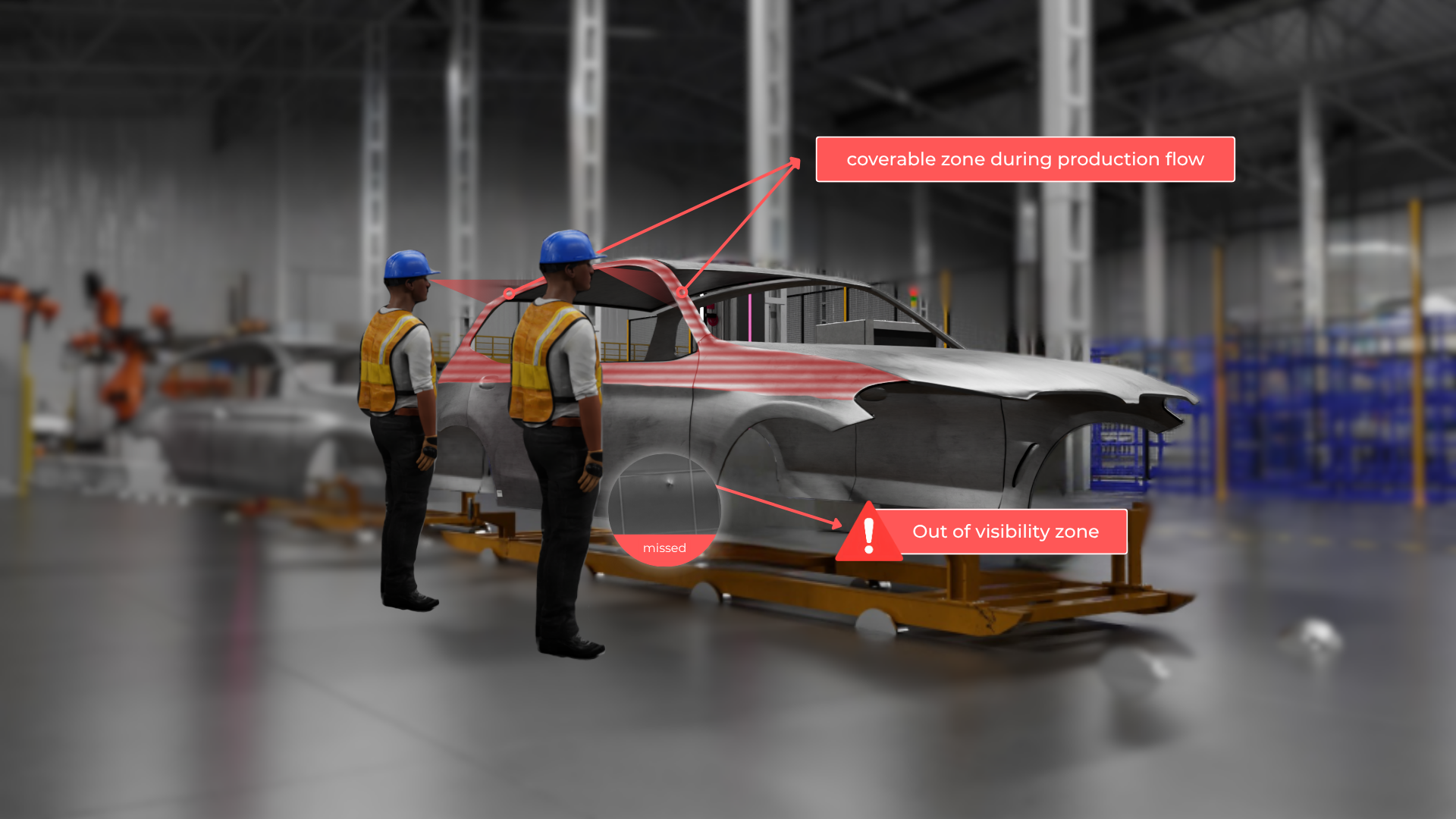
❌Limited surface visibility
❌ Operator-dependent inspection
❌ Up to ~80% defect capture*
❌ Defects can be missed between stations
❌ No digital defect traceability
❌ Typically 4–6 inspection operators*
✅ 100% inline surface coverage
✅ Consistent AI-based inspection
✅ Up to ~98% defect capture*
✅ Multi-class defect detection & classification
✅ VIN-linked defect mapping
✅ 2–3 operators focused on rework*
Every Body Shop is different — lighting, panel geometry, vehicle mix, and defect patterns vary from plant to plant.
To achieve consistent and reliable cosmetic defect detection, our AI models are customized to your exact environment before deployment. Here’s how we tailor the system for accurate results from day one:
We collect sample defects, analyze your BIW panel shapes and surface reflections, and measure lighting and conveyor conditions. This ensures the AI understands your factory’s unique visual signature.
We build a digital twin of your vehicle panels and generate thousands of realistic micro-defect variations (dent, bump, ripple, waviness) under your exact lighting and angles.This lets the AI learn how defects truly appear in your line — not in a generic dataset.
We install the camera–lighting system, deploy the optimized model on your industrial edge PC, and calibrate everything for your takt time and visual environment.

Vision AI systems designed to inspect, adapt, and scale across manufacturing lines.