May 21, 2026
.png)
In April 2026, robolaunch took part in Automotive Circle Car Body Xperience 2026 as one of the speakers, contributing to the discussions around car body engineering in North America and beyond. This year in its fourth edition, the event brought together automotive engineering experts in Rochester, Michigan to discuss the latest developments in body design, manufacturing, and production systems.
Over two days, the conference offered a highly technical program featuring presentations from leading OEMs and suppliers, along with opportunities to benchmark real Bodies-in-White (BIW) and exchange insights on current engineering challenges. The focus was not on high-level trends, but on practical, production-oriented discussions—ranging from design decisions to manufacturing constraints.
Within this context, robolaunch contributed with a presentation on AI-based surface inspection in body shop environments, addressing how quality challenges evolve under real production conditions. The discussions throughout the event—both during sessions and in direct exchanges with industry participants—closely aligned with this topic.
One of the clearest takeaways was that surface quality is not an isolated issue, but a shared challenge across OEMs, Tier-1 suppliers, and material providers. This made the event not only a platform for showcasing solutions, but also a valuable environment for aligning on the underlying problems shaping automotive manufacturing today.
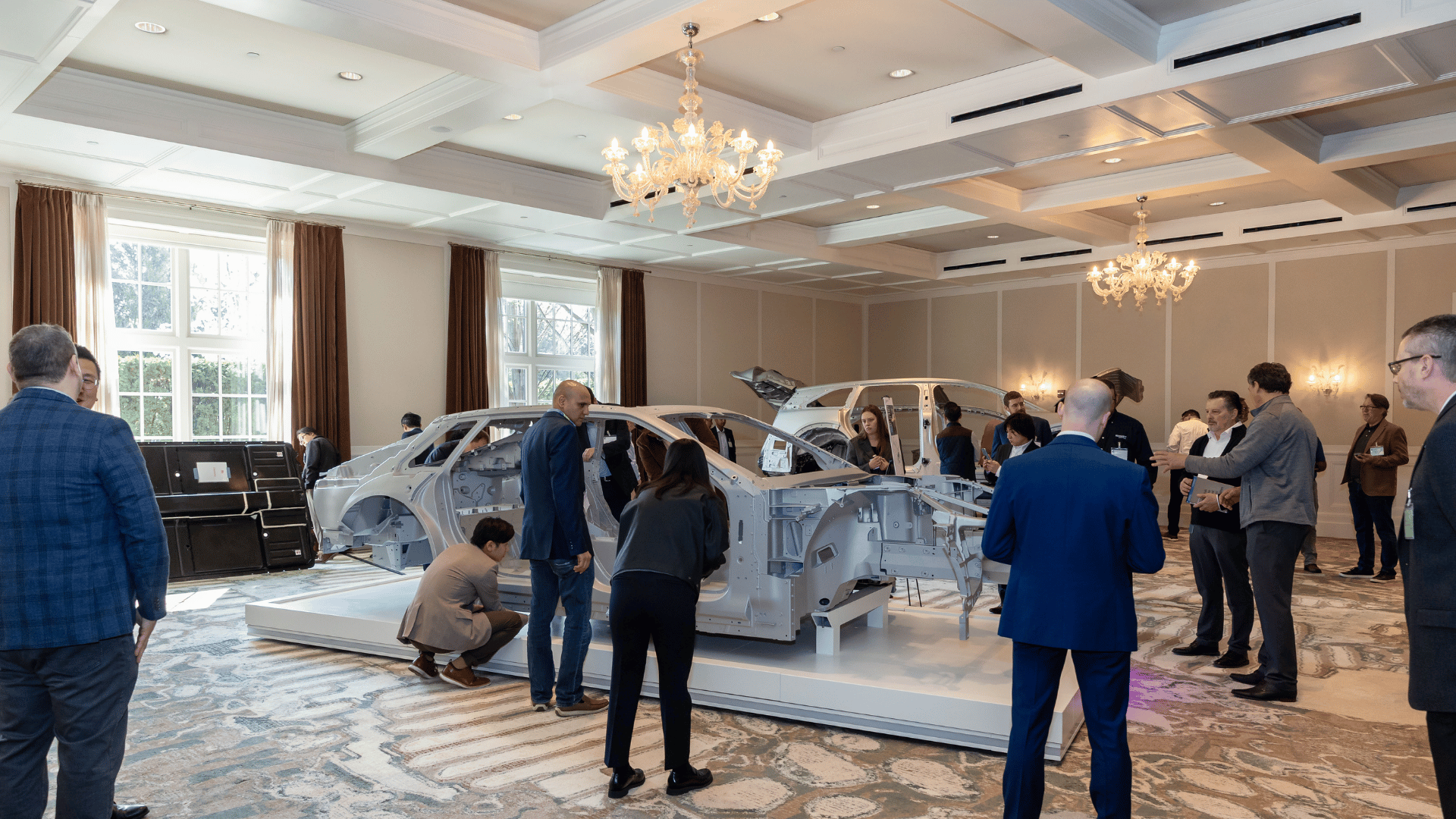
Across sessions and discussions, a consistent pattern emerged: the challenges in body engineering are no longer isolated—they are increasingly interconnected.
One of the most noticeable shifts was in how material decisions are approached. Instead of clear-cut choices such as steel versus aluminum, engineers are now working with hybrid structures that combine multiple materials within the same system. These decisions are no longer purely design-driven; they are shaped equally by manufacturability constraints, cost targets, and downstream process impact.
This shift introduces a level of variability that propagates beyond design—directly affecting production and inspection.
At the same time, the transition to electric vehicles is redefining body architectures. Battery integration, safety requirements, and packaging constraints are pushing structural changes, particularly around enclosures and load-bearing components. These changes are not only altering how vehicles are built, but also how they need to be inspected—both in terms of accessibility and surface behavior.
Another strong signal throughout the event was the focus on manufacturing simplification. Across different OEMs and suppliers, there is a clear effort to reduce part count and streamline joining methods. The objective is straightforward: improve efficiency and reduce sources of variability in production.
However, this is where a more subtle but important contradiction appears.
While design and assembly strategies are being simplified, the underlying systems are becoming more complex. The increasing use of adhesives, reinforcements, and multi-functional materials introduces new variables into the production process—many of which are less visible and harder to control.
What emerges is a dual dynamic shaping modern body shop environments: “Simplification at the design level, complexity at the system level.”
This tension was not always explicitly stated in presentations, but it became evident through discussions and comparisons across different approaches.
And importantly, this dynamic has direct consequences for quality.
As variability increases and visibility decreases, maintaining consistent surface quality becomes significantly more challenging—especially in high-speed production environments where inspection must operate reliably under imperfect conditions.
.png)
A significant portion of the event focused on car body design and manufacturing technologies—how materials are selected, how structures are engineered, and how systems are optimized for performance and manufacturability.
Robolaunch’s contribution addressed a different, but directly connected phase: what happens when these decisions meet the reality of production in the body shop. In practice, production environments introduce a layer of complexity that is not always visible at the design stage.
For surface quality in particular, this leads to a set of practical challenges:
This makes the problem not only about detecting defects, but about doing so reliably under real production variability.
Existing approaches struggle to fully address this. Measurement-based systems are effective for geometry but limited for appearance-based defects. Tunnel-based vision systems provide controlled environments but require significant infrastructure. More generic vision solutions often lack robustness when exposed to production variability.
Within this context, robolaunch presented its approach to AI-based body surface inspection, built specifically for real production conditions.
The approach is based on the integration of three core components:
Rather than attempting to eliminate variability, this approach is designed to adapt to it—ensuring consistent inspection performance across changing production conditions. A key focus of the presentation was therefore not only detection capability, but consistency and stability in real-world operation.
To illustrate this, insights were shared from a deployment with Ford Otosan.
The system operates inline and is capable of:
These deployments demonstrate that AI-based inspection is not limited to controlled environments or pilot setups—it is increasingly being applied directly within production lines.
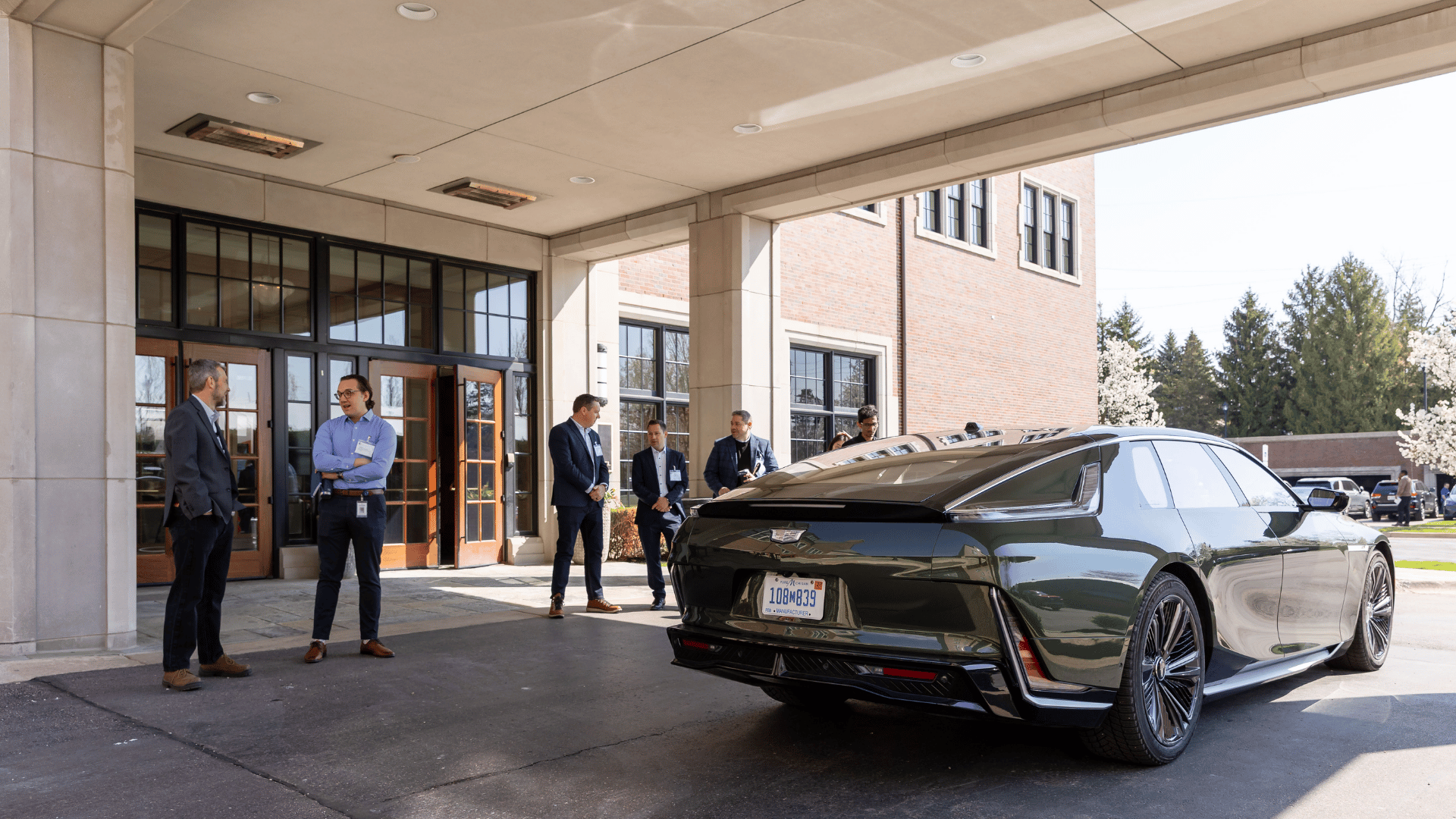
Car Body Xperience 2026 reinforced a clear direction for the industry.
As manufacturing systems continue to evolve, complexity is increasing—driven by new materials, design approaches, and production requirements. At the same time, expectations around surface quality remain high, leaving little margin for inconsistency.
This creates a growing gap between what traditional inspection approaches can deliver and what production environments require in practice.
In this context, AI-based inspection systems—when designed for real-world conditions—are becoming a key enabler for maintaining quality at scale.
The discussions throughout the event made it clear that this is not a future consideration, but an ongoing shift already shaping production environments today.
At robolaunch, the focus remains on developing and deploying systems that operate reliably under these conditions, working closely with industry partners to bring robust inspection solutions into real production lines.
