October 30, 2026
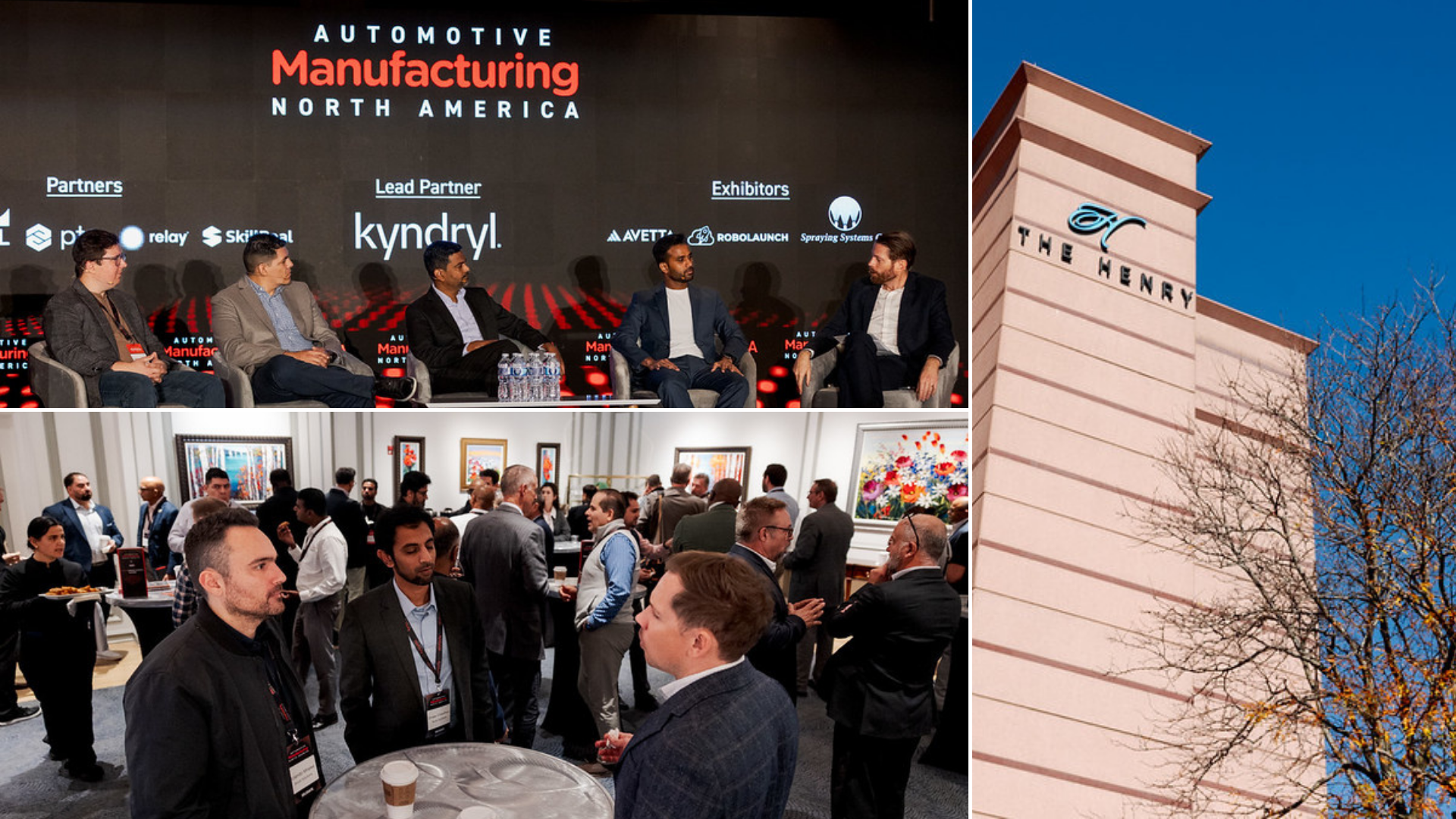
On October 21–22, robolaunch joined Automotive Manufacturing North America 2026 in Dearborn, Michigan, as an exhibiting partner. The conference brought together automotive manufacturers, suppliers, and technology providers to exchange perspectives on the challenges shaping production across the region.
Over the two days, we had engaging conversations with representatives from OEMs, Tier-1 suppliers, and technology companies about their quality inspection needs and experiences with automation. At our booth, we shared examples from our work in automotive production and explored where AI-based visual inspection could support different plants and production stations.
These exchanges were an opportunity to understand how manufacturers define their inspection priorities, what they expect from automated systems, and which practical challenges influence adoption. They also gave us valuable perspectives on how our experience in stamping and body shop inspection could translate to additional production environments across North America.
Across the two-day program, a connected challenge emerged: manufacturers need to introduce new capabilities and respond faster to change while keeping cost, quality, and operational stability under control. Several priorities stood out to us:
Together, these themes sharpened our view of automated inspection’s role: it must fit existing operations, remain useful through change, and provide information that supports timely quality decisions.
Our conversations at AMNA highlighted how differently manufacturers are approaching automated visual inspection. Its role is still being defined across factories and production stations, with different levels of adoption, application needs, and expectations. Consistent quality, however, was a shared concern.
Listening to these experiences gave us a useful perspective on where our work fits. A common quality objective can lead to very different inspection requirements depending on the part, the process, and the point at which a defect needs to be identified. This made our existing production applications a valuable starting point for discussing what automated inspection could deliver in other environments.
At our booth, we shared examples from our work in stamping and body shops, giving attendees a concrete basis for exploring their own requirements.
In stamping, our examples focused on identifying surface tears and trim cracks on parts as they leave the press process. Here, inspection needs to capture relevant defects within the available production cycle and provide results early enough for teams to respond before affected parts move downstream.
Body shop inspection introduces a different set of challenges. Dents, dings, scratches, and surface deformations must be distinguished from oil, handling traces, and other appearances on reflective, unpainted surfaces. Different vehicle configurations add further variation. We explained how camera placement, lighting, and AI models work together to make these defects visible and support consistent inspection under production conditions.
These examples helped connect the broader idea of AI-based inspection with specific manufacturing decisions: which surfaces need coverage, what counts as a relevant defect, and how the result should support the quality team.
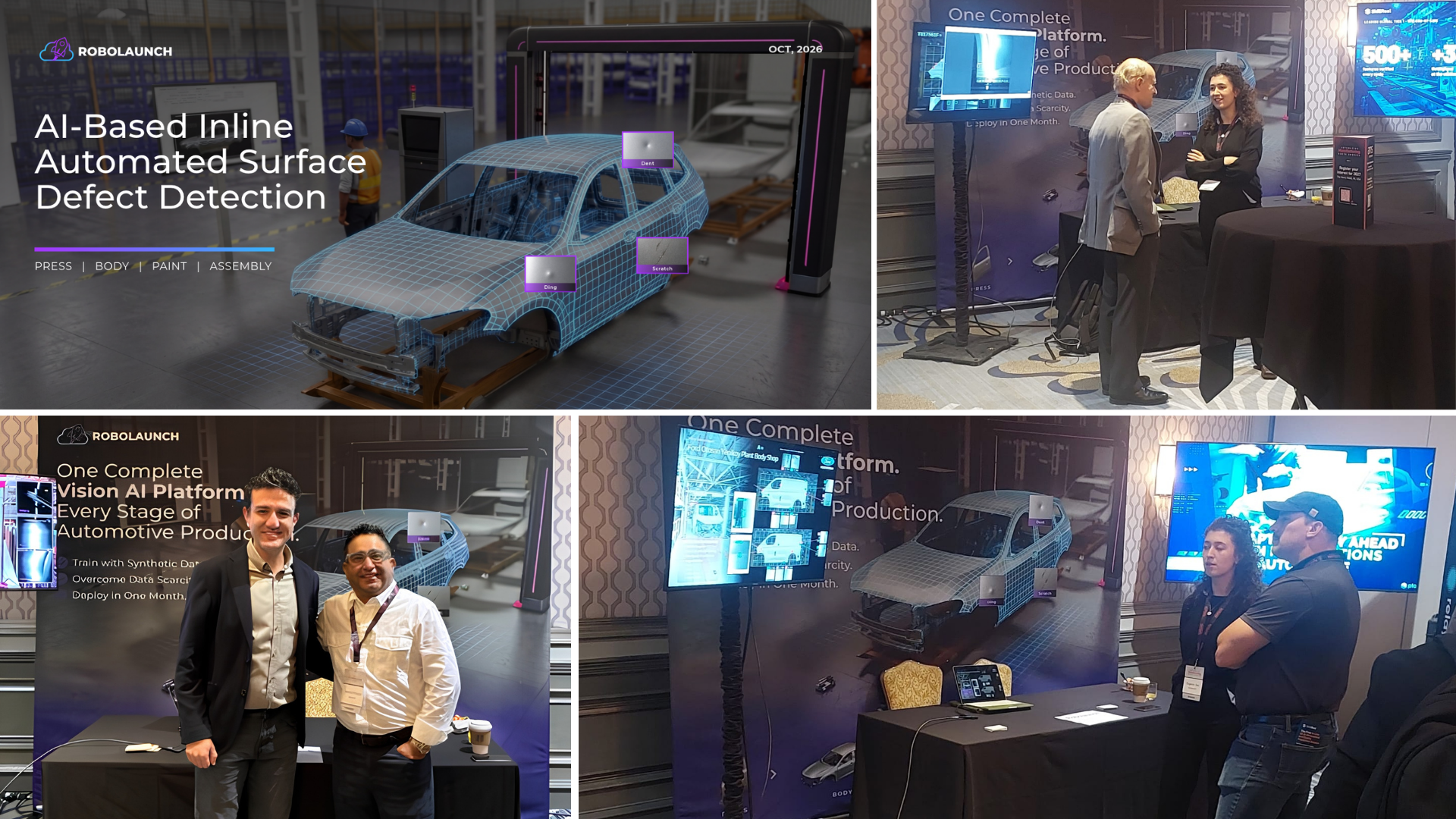
A key part of explaining our approach was showing how we train models for these applications. Collecting a representative set of real defects is difficult, particularly when certain defects occur infrequently or when a new part or vehicle variant is introduced.
We described how we use digital representations of parts and simulated defects to generate labeled training images. This allows us to introduce variations in defect appearance, position, lighting, and surface conditions without depending entirely on examples collected from production. Real images and production feedback remain essential for evaluating and refining performance.
For us, synthetic data is closely connected to the question of scale. It provides a way to prepare models for additional parts and conditions while reducing the need to begin each application with an extensive defect collection effort.
The range of challenges discussed at AMNA strengthened our view that there is a meaningful opportunity for an adaptable inspection approach. The shared need for consistent quality creates a common foundation, while each station still requires attention to its own imaging conditions, defect criteria, and operational constraints.
Our focus is on making that adaptation more repeatable. Combining production-focused imaging, AI models, and synthetic data gives us a foundation for extending what we have learned in stamping and body shops to further applications. The conversations helped us understand where that experience is relevant—and where the next questions need to be explored with manufacturers.
We left AMNA with a clearer sense of both the shared need for consistent quality and the differences that shape inspection at each plant. Scaling automated inspection requires understanding which defects matter, where they need to be caught, and how production teams will use the results.
The conversations gave us an opportunity to examine our existing experience through the requirements of other manufacturers. They helped us identify applications where lessons from our stamping and body shop deployments could transfer, alongside questions that need closer evaluation of parts, surfaces, and operating conditions.
Our next step is to continue these exchanges in more technical detail, working with manufacturers to define inspection priorities and assess suitable approaches. We thank everyone who shared their experiences with us, and the AMNA organizers for bringing this community together. We look forward to building on the connections made in Dearborn.
